
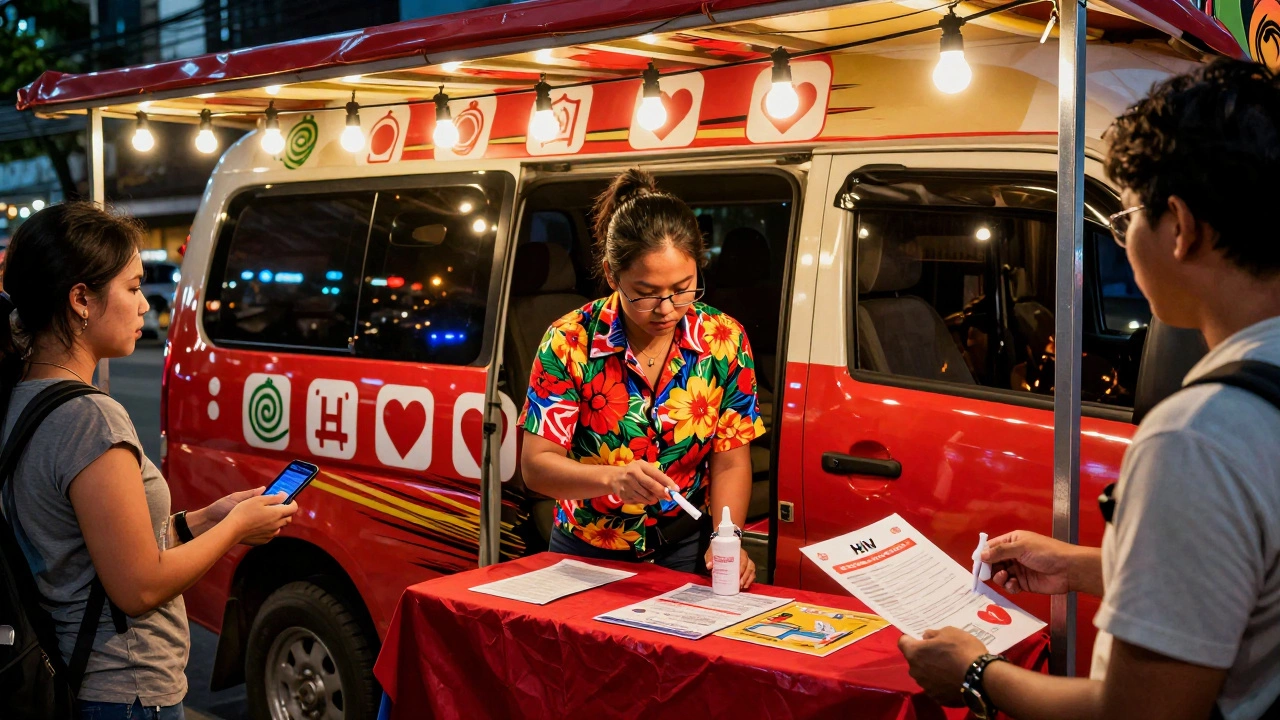
Across the globe, sex workers are not waiting for governments or NGOs to act. They’re building their own networks, handing out free condoms, teaching safer sex practices, and running peer-led testing clinics-all while facing stigma, criminalization, and violence. In Nairobi, sex workers walk the streets at night with test kits in their bags. In Bangkok, they run mobile clinics out of vans. In Rio, they’ve trained dozens of peers to recognize early signs of HIV and connect people to treatment. These aren’t charity projects. They’re survival systems, built by people who know the risks better than anyone else.
Some of these efforts started small. A group of women in London began meeting in back rooms of pubs after a cluster of HIV cases hit their community. They didn’t have funding, so they used their own money to print flyers and buy lube. One of them, a former dancer from Ukraine, started posting about safe practices on local forums. That’s how london euro escort communities began sharing real-time health tips-no middlemen, no filters. Word spread. Soon, they were organizing weekly drop-in sessions near King’s Cross, offering rapid tests and connecting people to free PrEP. No one asked for permission. They just did it.
They Know the Streets Better Than Anyone
Public health programs often assume sex workers need to be ‘taught’ how to protect themselves. But the truth is, many already know. What they lack is access, trust, and legal protection. In places like Uganda and India, health workers sent in from outside have been met with suspicion. Why? Because past interventions came with judgment, not support. Sex workers were told to stop working, or face being reported to police. That didn’t stop HIV. It just drove people underground.
Peer-led groups flipped the script. Instead of telling sex workers what to do, they asked: What do you need? In South Africa, a network called Sisonke started by asking sex workers to name the biggest barriers to testing. The top answer? Fear of being recognized by clinic staff. So they set up mobile units that rotated locations every week. No names. No IDs. Just a quick finger-prick test and a bag of condoms. Within a year, testing rates jumped 67% in areas where they operated.
Global Networks, Local Solutions
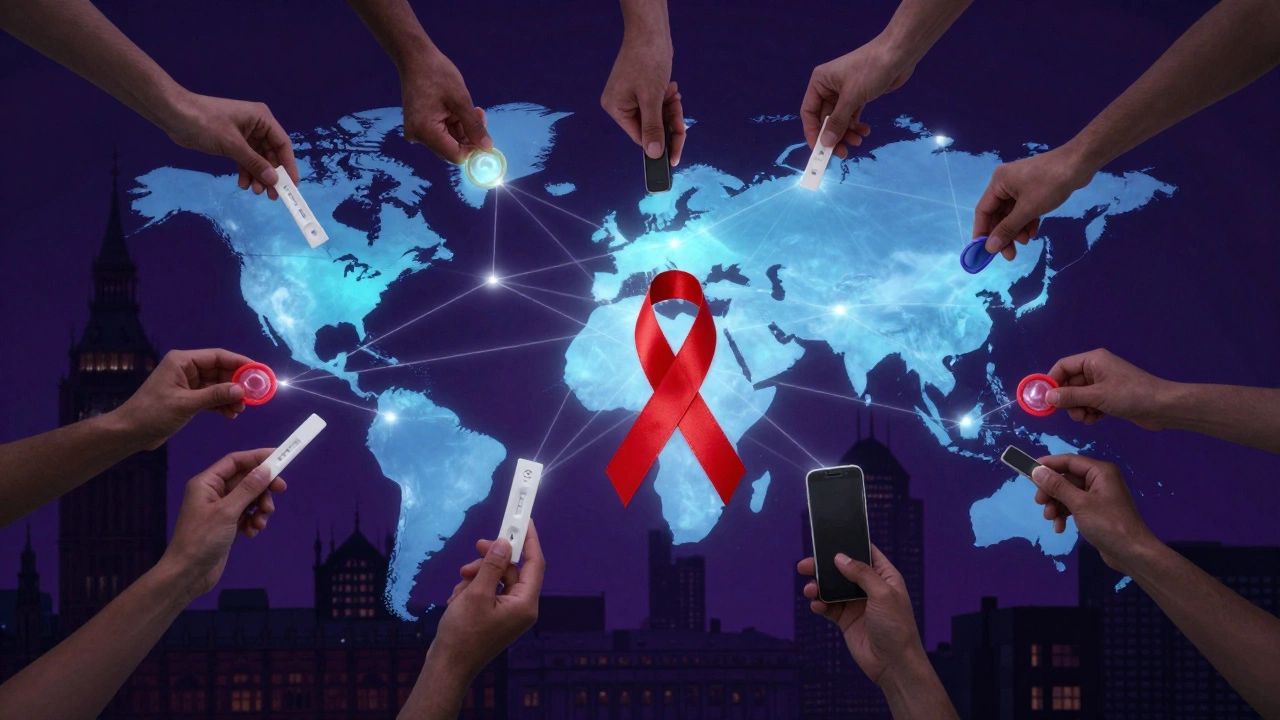
These efforts aren’t isolated. They’re connected. A sex worker in Manila shares a test protocol with someone in Toronto via encrypted messaging. A group in Mexico City uses the same condom distribution model as one in Berlin. The Global Network of Sex Work Projects (NSWP) has been documenting these models since the 1990s, and the data is clear: when sex workers lead, outcomes improve.
In Europe, the difference is visible. Cities where sex work is decriminalized-like parts of Germany and the Netherlands-have HIV rates among sex workers that are nearly half those in places where it’s criminalized. But even in places where the law is hostile, organizing still works. In Russia, where sex work is illegal and police routinely harass workers, underground collectives use burner phones and encrypted apps to coordinate. They’ve created a decentralized network of safe drop points for lube and testing kits. One member in St. Petersburg told a researcher: "We don’t trust the state. But we trust each other. That’s enough."
Meanwhile, in the UK, sex workers in London have pushed for policy changes by testifying in parliamentary hearings. They didn’t wait for a seat at the table-they built their own. One coalition, led by migrant workers from Eastern Europe, successfully lobbied for free HIV testing to be offered in all public libraries in London. It wasn’t easy. They faced pushback from officials who called it "unprofessional." But they kept showing up. And they won.
Why the ‘Escort’ Label Matters
Language shapes perception. When media calls sex workers "escorts," it often implies glamour, choice, or luxury. But for many, especially migrant workers, "escort" is a survival term-not a lifestyle. In cities like Paris and Madrid, women who identify as "escort london euro" or "london escort euro" are often the most vulnerable. They’re isolated, undocumented, and rarely have access to mainstream health services. Yet they’re also the most connected within their communities. They know who’s sick. Who’s missing. Who needs help.
That’s why peer education works. A woman who’s been working the streets for five years knows when someone’s acting differently. She knows when a client is pressuring someone to skip a condom. She knows which clinics are safe and which ones report to immigration. That kind of knowledge can’t be taught in a classroom. It’s earned through lived experience.
What’s Working? The Data Doesn’t Lie
A 2024 study published in The Lancet analyzed 12 peer-led HIV prevention programs across 8 countries. The results were striking. In every single case, HIV incidence dropped by at least 40% within two years. Programs that relied on outside health workers saw little to no change. The difference? Control. When sex workers designed the programs, they included what actually worked: anonymity, flexibility, and trust.
One program in Johannesburg gave out pre-packaged HIV test kits with step-by-step instructions in local languages. Workers didn’t need to visit a clinic. They could test themselves at home, in a park, or even in a client’s car. The kit came with a prepaid phone number to call if they needed treatment. Within six months, 82% of participants had tested at least once. In comparison, the city’s official clinic program had a 31% testing rate over the same period.
Barriers Still Exist-And They’re Political
These programs succeed despite the law, not because of it. In the U.S., the Anti-Prostitution Pledge still blocks federal funding for any organization that doesn’t explicitly oppose sex work. That means even groups doing life-saving work can’t get U.S. aid if they don’t condemn the people they’re trying to help.
In Australia, where sex work is decriminalized in some states, services are still patchy. In New South Wales, peer-led groups run regular testing events-but only because volunteers donate their time. There’s no government funding. No official recognition. Just a group of women meeting every Thursday under a bridge in Sydney, handing out kits and listening.
And in places like Poland and Hungary, where anti-LGBTQ+ laws are tightening, sex workers are being pushed further into silence. Some have moved online, using apps to connect with clients while avoiding street-based risks. But that comes with new dangers: less control over who they meet, no way to verify clients, and no one to turn to if something goes wrong.
What Can You Do?
You don’t need to be a sex worker to support this movement. You just need to listen. If you’re a policymaker, fund peer-led programs. If you’re a journalist, stop using sensational headlines. If you’re a health worker, step back and let the community lead. If you’re a client, respect boundaries. And if you’re just someone who cares, amplify their voices.
There’s a myth that HIV is a thing of the past. It’s not. In 2024, over 1.3 million new infections happened globally. Most were among people who are marginalized-sex workers, trans people, migrants, drug users. They’re not statistics. They’re people who are organizing, surviving, and saving each other every single day.
And if you want to see what real public health looks like, look to the streets. Look to the women handing out condoms in the dark. Look to the men testing their peers in alleyways. Look to the groups that don’t wait for permission. They’re not asking for praise. They’re asking for space. And sometimes, that’s all it takes to stop a pandemic.
Meanwhile, in London, a group of sex workers from Eastern Europe started a WhatsApp group called "Safe Nights." They share tips on clients, safe locations, and where to get free PrEP. One member posted: "I used to think I was alone. Now I know I’m part of something bigger." That’s the power of solidarity.
They’re not waiting for someone to save them. They’re saving each other.